Tuesday, 25 March 2014

Proper enforcement - not disapproving looks - needed to protect children from smoking in cars

I once pulled up alongside a car at traffic lights, glanced over at the driver next to me and shook my head disapprovingly. She hadn't engaged in any reckless behaviour per se. There was no sudden braking, swerving, lack of indicating or speeding involved.

•Pic posed by model

But she was smoking and there were two young children sitting in the back, one of them in a baby seat. A rear window may or may not have been open a couple of inches.

I caught her eye briefly and she extended a single digit gesture in my direction. She knew what I was getting at. In fairness, I had been far from subtle and it probably wasn't any of my business. After all, even though she was inflicting her secondhand smoke on two innocent kids, she wasn't breaking any laws.

Had we confronted one another, I'm certain she would have questioned my right to judge her parenting skills. I had no reason to doubt that her children were the centre of her universe; that she adored them and provided for most of their needs. So did I consider her to be a bad parent for smoking in a car with children? The truth is I did.

Predictably, smokers' group Forest Eireann have rejected a call by the Royal College of Physicians of Ireland for a ban on smoking in cars with children. 

Their spokesperson John Mallon said: "We don't condone smoking in cars with children because it's inconsiderate at best. People shouldn't do it and by and large they don't. 
"The overwhelming majority of parents who smoke wouldn't dream of lighting up in a car carrying a child so why do we need a law that will have almost no impact? It's heavy-handed and extremely patronising." 

He added: "We urge the Government to focus on education, not legislation. That's the mature way to change people's behaviour."
Unfortunately, self regulation doesn't work well in this country. Even where smoking bans are in place - such as within the campus of Beaumont Hospital - I have seen them blatantly breached by patients and visitors, despite the best efforts of staff and management.

The only thing that works in Ireland is proper enforcement. Imagine trying to introduce a voluntary ban on smoking in the workplace in this country? One of the few things we can be grateful to Fianna Fail for is the introduction and policing of the smoking ban in pubs, which came into effect 10 years ago. It was one of those rare occasions when Ireland led the way by seeing through such a progressive health measure. Many other countries have since followed our lead.

The workplace ban has reportedly saved thousands of lives, reduced the level of heart attacks and led to a marked decline in the number of people smoking. Savvy publicans rose to the challenge by reinventing themselves as a thriving food business. Families can now enjoy a quality meal in their local pub without exposing their children to the risks associated with passive smoking. Those who still want to smoke can put on their jacket and head out to the beer garden.

The Minister for Health, James Reilly, has now promised that legislation will be published within weeks to deal with the issue of smoking in cars when children are present. He noted that while gardai would be able to enforce the issue, they probably wouldn't have to due to peer pressure from other motorists. With respect, I have to disagree with Minister Reilly on such a naive assumption. If the disapproving looks of responsible parents was enough of a deterrent, we wouldn't need legislation in the first place.
Parents who smoke in cars when their children are passengers need a short, sharp shock to change their irresponsible behaviour. A combination of penalty points and hefty fines will be required to show them the error of their ways. But legislation will only be effective if proper Garda resources are provided to enforce the measure - just look at the amount of drivers you still see using their mobile phones behind the wheel on a daily basis.

This Government once again has a golden opportunity to be progressive when it comes to reducing the impact of smoking on public health. Politicians will need to pull out all the stops to get the measure through urgently because this time the protection of our children is involved.

Thursday, 13 March 2014

Would 'Fr Ted' have escaped a Twitter backlash?

Imagine if Twitter had been around back in 1995 when the first ever episode of 'Fr Ted' was broadcast. If I remember correctly, it was the one featuring the Craggy Island fairground, with its crane of death, pond of terror, spinning cat, tunnel of goats and freak pointing. It still makes me laugh.

I can vividly recall watching it from the comfort of my one-bedroom flat in Ranelagh and realising that this was going to be something special. If I had been able to tweet back then, I'm sure I would have been fulsome in my praise.

•Writer Graham Linehan pictured (centre) with the cast of 'The Walshes'

Those were the dark, backward days of the last century when writing to the equivalent of Arthur's Mailbag or whoever opened the post at TV stations was the only way to vent your spleen if something on the telly box irked you. Never in our wildest dreams could we have predicted a time when you would be able to directly tell the creators of a show - and the world at large - exactly what you thought of it within seconds of the opening credits.

But almost two decades on that's where we are now. Social media, for all its benefits, has given bullies, cowards, creeps, begrudgers - and yes, morons - a variety of outlets for their nastiness.

'Fr Ted' co-creator, Graham Linehan, is the writer behind BBC/RTE's new co-production 'The Walshes', which got the equivalent of a schoolyard hiding on the Twitter machine as the first episode aired. You had to marvel at how so many of the Twitterati managed to multitask with such venomous efficiency. Some balance was brought to the debate by more seasoned commentators who cautioned against a rush to judgement and urged the detractors to give the show a chance. Linehan himself rose to the provocation, advising one tweeter to just try watching the show before calling him a f****** moron.

I knew Graham Linehan briefly in 1987/88 when we were both in Colaiste Dhulaigh in Coolock doing post-Leaving Cert media courses. The Castleknock native was an easygoing, likeable and approachable guy. When I went on to do my work experience in Hot Press, Linehan was already a rising star at the music magazine. His insightful, witty and offbeat film reviews, in particular, raised the bar for critics everywhere. It was during this period at the magazine that he met his 'Fr Ted' co-writer Arthur Matthews. The duo eventually moved to London to ply their trade and through sheer hard graft and not inconsiderable talent ended up creating some of the most memorable comedy in television history.

Linehan is also the brains behind 'The IT Crowd' and 'Black Books'. It took me a couple of episodes to get into the characters in these sitcoms but my conversion didn't take long and I am now a committed devotee of both shows.

And this was indeed the case with 'The Walshes'. There was a lot more of Linehan's wacky form on display in the second and third episodes but it probably wasn't enough to placate the Twitter whingers (Twingers?). It takes more than 140 bitchy characters to be a writer, folks, particularly one that is respected and successful. If social media had been around in 1995, one hopes that Linehan would have tweeted back at critics of 'Fr Ted' with a simple 'FECK OFF!'

Tuesday, 11 March 2014

Are gender quotas the way forward for Irish politics?

Eyebrows were raised when it recently emerged that the BBC was to ban all-male panels on popular shows such as 'QI', 'Mock the Week' and 'Have I Got News For You'. Top brass at the broadcaster ruled that future shows would have to feature at least one woman. 

Political correctness gone mad, tokenism or a step forward for gender equality in the male dominated world of television? It depends on your viewpoint really. There are some incredibly talented female comedians in the entertainment business although it is still an area dominated by men. A bit like politics.

Fianna Fail's European candidate for Dublin has now called on the Government to show a real commitment to gender equality in Irish politics by dedicating 50 per cent of seats in the upcoming local elections on May 23 to females.


Mary Fitzpatrick, a Dublin city councillor since 2004, knows well what it's like to be a female candidate in a testosterone-fuelled business like politics. She famously took on the might of the so-called Drumcondra mafia to stand in the 2007 general election, losing out to Cyprian Brady on transfers from Bertie Ahern.

•Cllr Mary Fitzpatrick pictured with Fianna Fail leader Micheal Martin after being announced as the party’s Dublin candidate for the European Elections. PHOTO: CONOR McCABE PHOTOGRAPHY

She has been an active and effective public representative on Dublin City Council - not because she's a woman but because she's a hardworking, honest and able politician. As Fianna Fail seeks to rebuild its damaged brand, she is a sensible choice for their European Election campaign.

In the next general election at least 30 per cent of the candidates will have to be female. Cllr Fitzpatrick describes this requirement as "a conjuring exercise". She believes real gender equality can only be delivered if it is first introduced at local authority level and applied to seats - not just names on electoral tickets. 

"In reality we have a de facto male monopoly in Irish politics at present," Cllr Fitzpatrick says. "Less than 16 per cent of our elected representatives in the Oireachtas are female. Women represent 52 per cent of the population but make up just 15 per cent of elected representatives."

Cllr Fitzpatrick points out that Ireland is currently ranked 89th in the world for female political participation. She is concerned that political parties and groups will find a way around the 30 per cent female quota in the next general election and will select candidates in areas where they know they have little chance of winning a seat. So rather than bringing about any seismic change in gender equality, she feels that the Government's quota system may only make a bad situation worse. That's why she wants 50 per cent of seats in the upcoming local elections dedicated to women.

While there is some merit to her proposal, I am not completely convinced that it is the way forward. In a democracy we are entitled to vote for the candidates who we feel will best represent our interests. They get our votes based on an expectation that they will be effective public representatives - not on the basis of their gender.

We certainly need to make it easier for women to participate in politics. I would favour a system, for example, that requires a 50/50 gender split in terms of candidates selected to run for all local and general elections. This would give the electorate a clear choice in who they want to vote for and would undoubtedly increase the numbers of women councillors or TDs.

In addition, I believe there should be an equal gender split in terms of ministerial appointments. I don't accept the argument that ministerial portfolios should be solely based on experience - just look at some of the clowns that have sat around the cabinet table over the past number of decades.

Mary Fitzpatrick's proposal is a welcome contribution to the debate on gender equality in politics. But like the BBC's rule on women panelists on its shows, is it a step too far? 

Monday, 3 March 2014

Government has undermined gardai by closing stations

I visited my local Garda station recently to get a passport application signed. When I say local, I mean of course the station located closest to my village. You see, our little part-time station was closed down in 2012 as part of the Government's fight against crime.


But we're one of the lucky areas. Our former Garda station isn't being sold-off - at least not yet - and will be handed over to two deserving local groups for community use. So every cloud etc.

But I digress. The guard dealing with my passport application was a decent fella and probably represents the majority of hardworking, dedicated members of the force in this country. There's little doubt that the whistleblower's allegations and the suspected bugging controversy have had a major impact on rank and file morale. How could they not?

The Taoiseach himself said at the Fine Gael Ard Fheis over the weekend that those who seek to undermine the gardai should hang their heads in shame. But it seems to me that the Government is doing a pretty decent job of undermining the Garda Siochana themselves by closing rural and urban stations, reducing opening hours and starving the force of vital resources such as patrol cars.

The guard I spoke to said the lack of cars within the division - and specifically at his station - had gone beyond a joke and was seriously impeding their ability to react to crimes. It means, for instance, that they often can't respond quickly to reports of burglaries, unless they happen to occur within walking distance of the station. Sometimes the gardai themselves get so frustrated that they even consider using their own private cars but are precluded from doing so by the regulations.

The Dail heard a claim recently that 300 patrol cars could have been purchased had penalty points not been cancelled. When you speak to gardai on the ground, you realise how much of a difference this funding would have made had it been channelled back into Garda resources.


The Dublin village I live in was once considered to be semi-rural but saw a population explosion during the building boom of the Celtic Tiger. If anything we now need more policing to reflect this new reality, not less. There has been a spate of burglaries in my immediate area since the Garda station closed. Maybe it's just a coincidence but I don't remember break-ins in our estate on such a scale before then.

Neighbours resorted to looking out for each other, particularly when they were going to be away from their homes overnight or for long periods during the day. Some were forced to go to the expense of updating their alarms or installing expensive CCTV equipment. Local Facebook pages became virtual crime prevention sites.

In some cases the same houses were repeatedly targeted. Those responsible felt they could rob with impunity. Because if you're a low-life criminal intent on ransacking a stranger's home, a town with no Garda station is a good place to start.

Monday, 24 February 2014

Telling our children the truth about gay marriage

The renowned stylist Gok Wan was on television over the weekend. As soon as he appeared, my nine-year-old son asked me if the man on the telly was gay.
 
I hesitated for a moment before responding, truthfully, that as far as I knew he was. What had made him think that?

"He seems very happy," came the reply, at which point my seven-year joined in the conversation.

"Well, maybe that's why he's called gay because gay also means happy," he reasoned.

Children today are no fools. I had once explained to mine that the word gay meant happy. They quickly informed me that gay also means a man being in love with another man or a woman being in love with a woman. 


Sure all they have to do these days is look at an episode of 'The Simpsons' to hear the word bandied about. That's why I made the decision to cut the pretence. By trying to 'protect' them from the reality of the word, was I fostering prejudice by giving the impression that there was something wrong with same sex relationships?

When I was growing up the word gay was used in a pejorative way. If something wasn't good, it was gay. If you didn't like something, it was gay. If somebody was different in any way, they were gay. It was a word favoured by the schoolyard bully. You got a hiding off them if you were deemed to be gay in any of its guises.

Ireland has belatedly grown up since then and some of us like to think we are more liberal and worldly now. We now realise that gay men and women are to be found in the most prominent positions. We have gay business people, gay television presenters, gay sports stars and gay politicians.
 
Many of them rightly choose to wear their sexuality openly and proudly. It's there for all of us to see. So what exactly are we protecting our children from by telling them that gay simply means happy?

In my view it is far better for a parent to teach their child the values of tolerance, inclusiveness and diversity; that to discriminate against a person on the grounds of their sexuality is as wrong as being racist.

The debate on marriage equality has got off to an unsavoury start after the Panti Bliss/Iona Institute affair (not that they're having an affair, just in case their lawyers are reading this!). Our children are going to hear a lot of talk about gay rights on television and on the radio in the coming months. The issue will be impossible to avoid. Inevitably there will be innocent questions asked. Whatever side of the debate you're on, at least try to give your kids a positive answer.

Wednesday, 19 February 2014

Kenneth Egan is a champion choice by FG

I was always a bit suspicious of political parties recruiting celebrity candidates in the run up to elections.

On the face of it, it smacks of desperation. Why should a big name have the right to serve as a public representative on the basis that they are well known? What about the hard-working party activists who have cut their teeth in political activism at grassroots level over the years?

These are the men and women putting leaflets through your doors at election time or organising local fundraisers for the party. Some of them may harbour political ambitions of their own and have a justifiable expectation that they can put themselves forward at a selection convention.

There have been some worthy celebrity candidates over the years, chief among them RTE's George Lee who romped home in the Dublin South By-Election in 2009. Unfortunately, it seemed that Lee had unrealistic expectations in terms what he could achieve as a TD and it wasn't long before he quit and returned to Montrose.

Not all celebrity candidates - despite their impeccable credentials - connect with the electorate. Chernobyl children's champion Adi Roche didn't do the business as Labour's nominee in the 1997 Presidential Election. Similarly, that party's decision to put former RTE journalist Orla Guerin on the European Elections ticket in 1994 didn't pay off, largely due to the resistance of Labour's officially selected candidate, the formidable Bernie Malone.

Celebrity candidates are back in the news. Olympic boxing hero Kenny Egan is to run for Fine Gael in the Clondalkin ward in the local elections in May. I am largely supportive of this decision for a number of reasons.

•Kenny Egan (centre) pictured with Paddy Barnes and the late Darren Sutherland after their victories in the 2008 Olympics. Photo by Darren Kinsella
I don't believe that big name candidates have the right to represent us in the Dail without having first served as a democratically elected councillor at local level. Many of our senior politicians started as members of a local authority and celebrities should be no different.

The fact that Egan is willing to stand in front of the electorate at ground floor level is admirable in itself. If elected, he will have to sit through mundane meetings about planning applications, road improvement schemes and council budgets. If he has the stomach for this, he may decide to put himself forward as a candidate in a future general election.

Moreover, Egan will be standing in an area that has seen its fair share of social problems, where young people are often exposed to drugs and crime. Many of them have zero interest in politics and feel alienated, disillusioned and disinterested.

To see a sporting role model such as Kenneth Egan stand for election may encourage younger people to engage with politics and local issues. Egan has also openly spoken about his former battle with alcohol and is happy to share his experiences with local youth.

Kenny Egan is proof positive that you can overcome the obstacles life throws at you. This is a powerful message to be able to convey to the youth of Clondalkin and young people at large. As celebrity candidates go, Egan is a solid and sensible choice.

Tuesday, 11 February 2014

The scene inside the Stardust as fire took hold

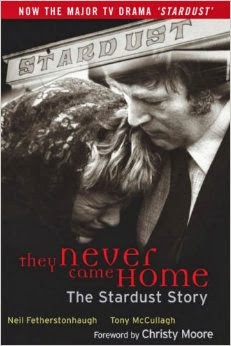
Tonight marks the 34rd anniversary of the Stardust fire. In this edited extract from the book 'They Never Came Home - the Stardust Story', we recall the scene inside the doomed nightclub as the blaze took hold.

•The Stardust nightclub pictured after the fire
The excitement in the Stardust was reaching fever pitch. Hundreds had gathered around the dance floor to see who would win the disco dancing competition. Albert Buckley joined his sister-in-law, Christine, on the floor. Together they watched Albert's younger brother, Errol, going through his moves. He was getting the loudest cheers from the crowd and easily stood out from the other competitors taking part in the final.

Just after 1.30am, DJ Danny Hughes stopped the music momentarily to announce that a boy and girl had been selected as the winners. The Buckley brothers were ecstatic when Errol was announced as the best of the men. The girl chosen from the three dozen hopefuls was 15-year-old Paula McDonald from Coolock.

Errol had brought the house down with his fantastic dance routine to the Patrick Fernandez disco hit, 'Born to be Alive'. He punched the air as he stepped up onto the stage to be presented with his prize by Hughes - a £25 K-Tel record voucher. The winning couple were invited to perform a victory dance on the stage and the large crowd of onlookers gathered to clap along to the song. Another DJ, Colm O Briain, took the microphone and encouraged the audience to join in on the dance floor. Hundreds took him up on the offer and danced to what was to be one of the last songs of the night. It was now 1.41am.

At the western side of the ballroom approximately fifty people were sitting or standing around five tables. Behind them was a roller blind made from a PVC-coated, polyester fabric. Split into five sections, the curtain was lowered to partition off an alcove of banked seating stretching to and along the side wall. The west alcove itself was the smaller of two such sections in the the Stardust. It measured over seventeen metres in length and ten metres in depth. There were eight tiers of seats, with each tier containing fifteen units of double seats. Some of the regular patrons of the Stardust remember being surprised when they arrived at the disco that night to find that the west alcove was sealed off and the larger north alcove was open. Usually the reverse was the case, with the north alcove only opened if the numbers warranted it.

Some of the people in this area were standing on tables and chairs to get a better view of the disco competition. A couple of girls stood on the ledge where the curtain came to the floor and were resting their backs against the partition. While the attention of most people was directed towards the dance floor, those standing against the curtain started to notice the smell of something burning. Linda Bishop was sitting at the first table in front of the blind, next to the main bar. As she was watching the end of the competition, she noticed a sudden rise in temperature. This surprised her because she had spent most of the night feeling cold. She mentioned to her friend, Sandra Hatton, that she thought the management had switched on the central heating. They both wondered why anyone might have done that, considering it was close to the end of the night. The girls shrugged their shoulders and got up to dance to one of their favourite songs, 'Lorraine', by Bad Manners.

Those remaining at the tables also started to smell smoke and they, too, felt a surge in temperature. Moments later, others sitting or standing in the area noticed a glow behind the curtain. Jacqueline McCarthy, from Kilbarrack, had just returned to her seat when she caught a strong smell of smoke. Suddenly she felt a blast of heat. More curious than her friends, Jacqueline lifted up the curtain beside her to glance underneath. What she saw filled her with instant dread. She ran past groups of people and rushed towards the main door. She grabbed the arm of a bouncer standing inside the foyer and shouted at him: "They've started a fire up in the corner."

More people peered behind the curtain as the glow behind it intensified. On top of three seats in tiers seven, eight and nine of row A, they could see a small fire. One girl described it as "quite small". An eyewitness later told police that the back of just one seat was on fire and "it could easily have been put out if somebody had thrown a coat over it". Gerard Quinn said he thought there was something in the shape of a coat lying on the seat in flames. By now, most of the people sitting in this area could smell what they would later describe as "burning tyres". While hundreds still danced away to the music, people standing at the side of the dance floor sensed a commotion and turned around, thinking that a fight had broken out behind them.

On stage, the assistant DJ was sifting through the record collection to select the final track of the night. He put a popular Adam and the Ants song on the turntable. The attention of some of the dancers facing the stage was now drawn towards the curtained-off area to the right-hand side. At first, all they noticed was a small flickering glow behind the curtain. However, as they turned around to get a better look, some light smoke appeared to slowly rise over the partition and drift across the ceiling. Most of them thought it was just a special disco effect that the DJ had set off to coincide with the end of the competition. They ignored it and continued on dancing.

•'They Never Came Home - the Stardust Story', by Neil Fetherstonhaugh and Tony McCullagh, was originally published in 2001 and was reprinted as an updated edition in 2006. The book was adapted for the award-winning RTE two-part drama, 'Stardust'. Limited copies still available on Amazon http://www.amazon.com/They-Never-Came-Home-Stardust/dp/1903582636

©Neil Fetherstonhaugh and Tony McCullagh